The Village, the Forest, the Orchard
The recipes below were imagined, tested and developed by Philipp Kolmann and Suzanne Benrhardt from Studio ERBA after their two-year long research residency in the landscapes between Topolò and Kojsko as part of the Uncommon Fruits project. Besides these finalised recipes, many more were tasted and tested, improvised and shared. The recipes below follow the three main landscapes where the research took place - the village of Topolò, the forest around the village and the orchard in Kojsko. Some of the recipes were shared during the opening of Log structure, during a final dinner in Kojsko and elsewhere!
Read the reflections and stories behind these recipes in the text Cracks between the village, the forest and the valley written by ERBA for Uncommon Fruits and Robida 12.
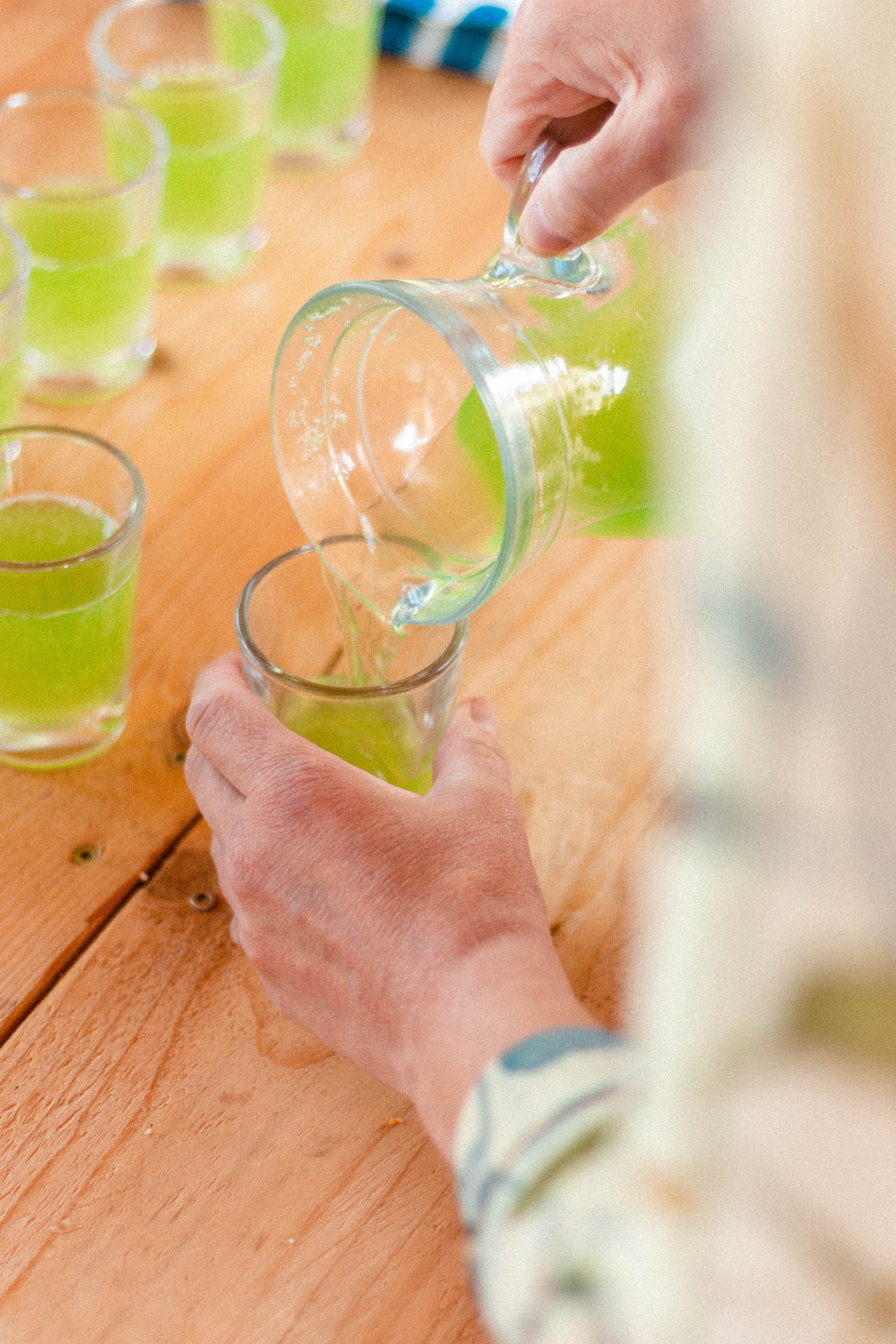
Based on the stories we collected in Topolò and the area, we developed both an alcoholic and a non-alcoholic beverage. Both contain herbs from local forests and meadows.
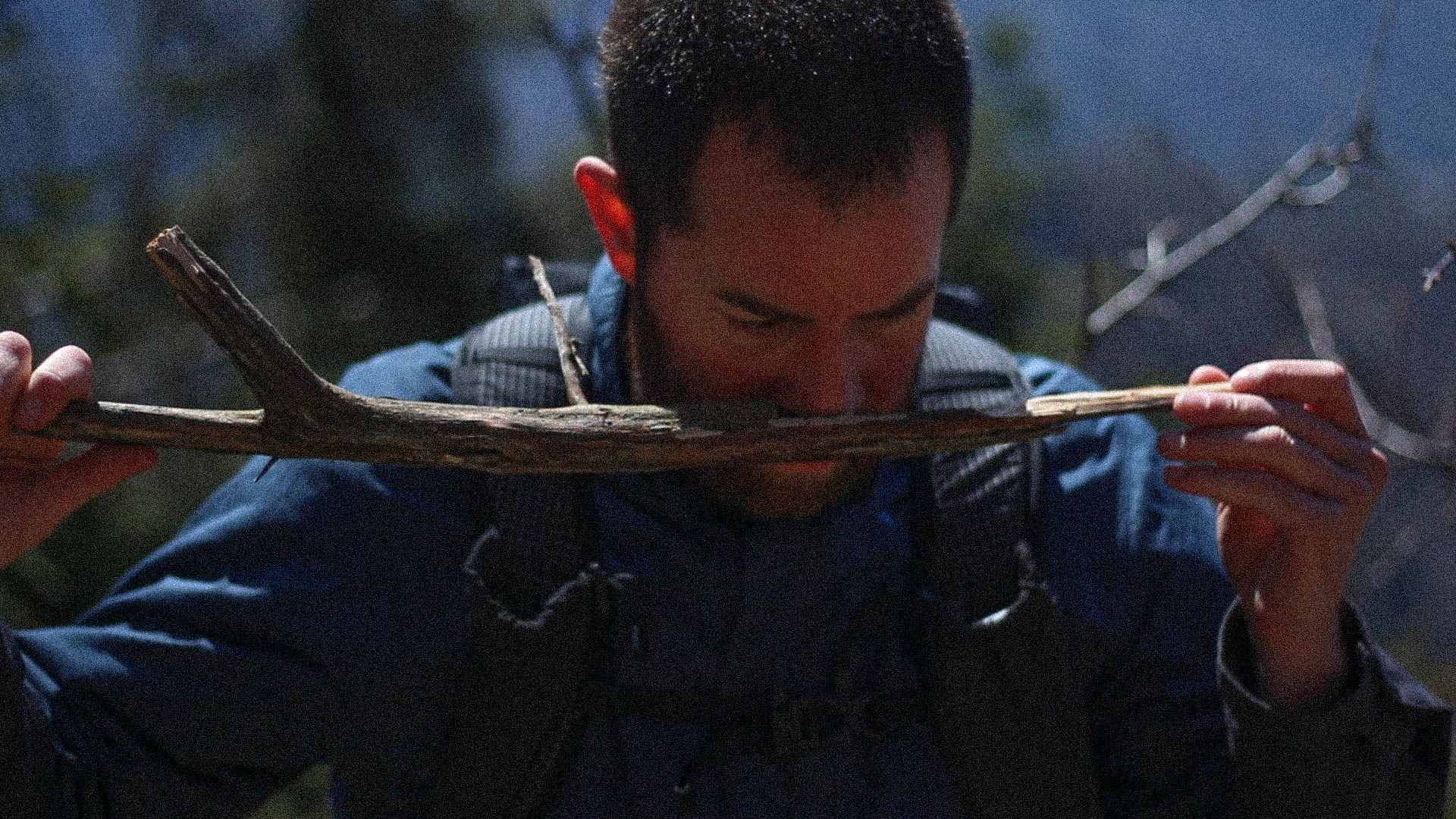
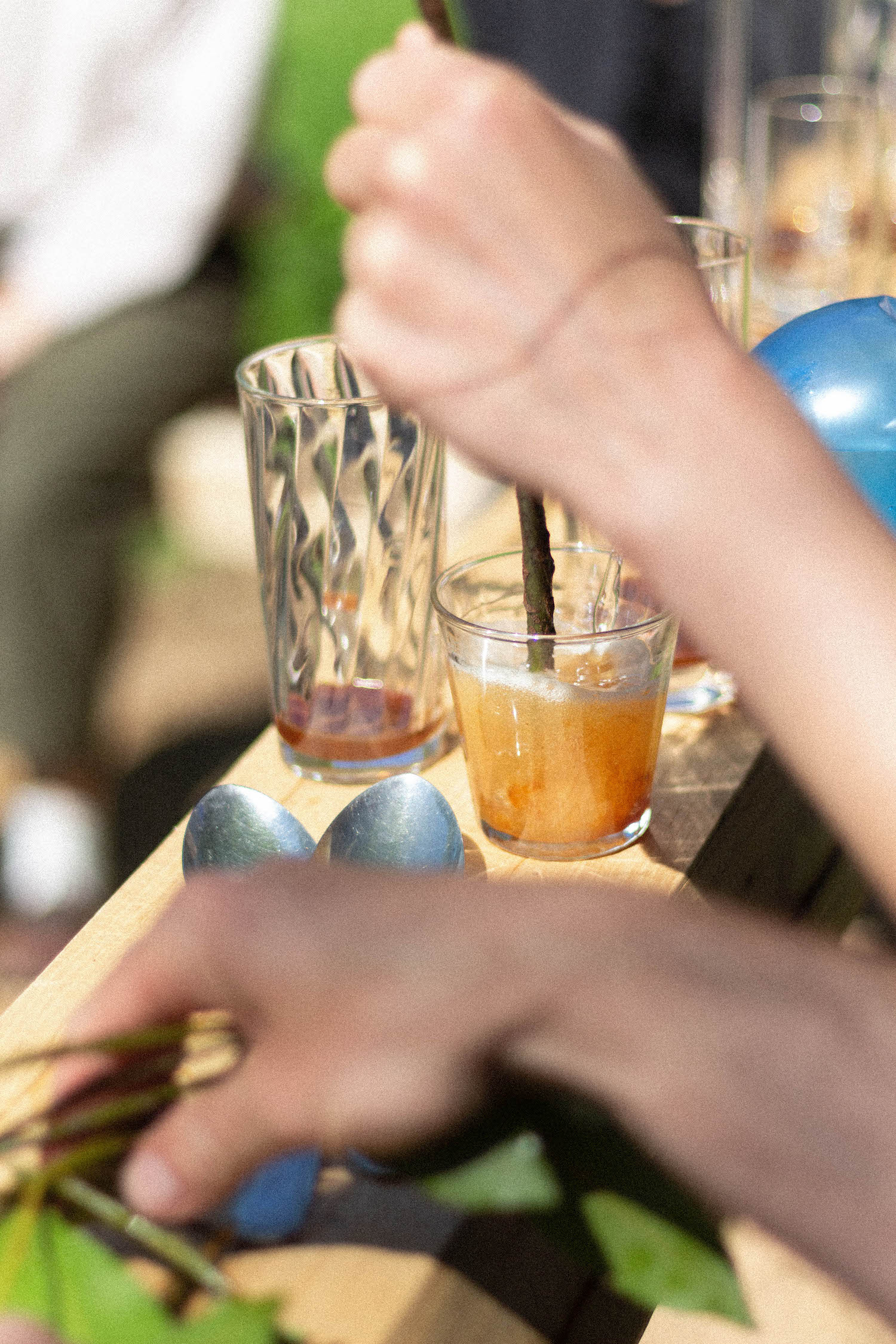
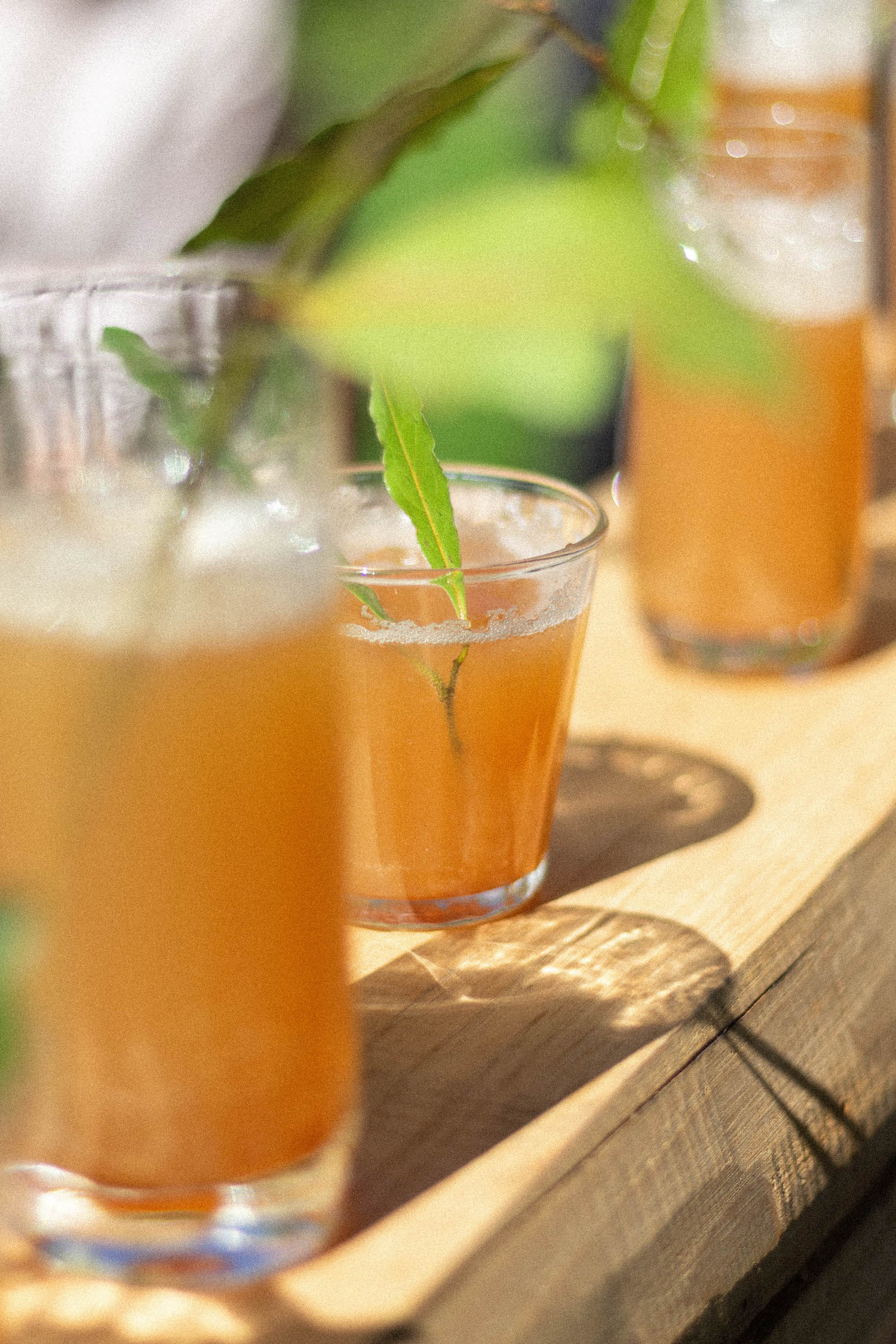
We called one drink Kolavrat, inspired by the mountain overlooking Valli del Natisone. As a base, we used reduced pear juice, cooked down into a deep, dark, aromatic syrup. This base is infused in direct sunlight with juniper wood, bay leaves, and bitter roots.
The syrup can then be used to prepare a non-alcoholic aperitif.
A similar herbal mixture was combined with an alcohol tincture, creating a drink that can be understood as an alternative to Aperol or Cynar-style beverages.
This process and combination emerged from the stories we were told, from local techniques of processing fruit, and from our interest in translating these traditions through contemporary culinary approaches.
Kolavrat Pear & Forest Herb Aperitif Syrup
A dark pear syrup infused with juniper wood, bay leaves, bitter roots, and meadow herbs. It can be served as a non-alcoholic aperitif or used as the base for an alcoholic bitter drink.
Makes
Approx. 700–800 ml syrup
Ingredients
For the pear syrup:
- 2 litres pear juice, preferably cloudy and aromatic
- 100 g sugar or honey, optional, depending on the sweetness of the juice
- 1 small pinch salt
For the infusion:
- 8–10 g dried juniper wood chips or a small piece of clean juniper wood
- 4 bay leaves
- 5 g dried bitter roots, for example gentian root, dandelion root, or angelica root
- 5 g dried meadow herbs, such as yarrow, thyme, mint, woodruff, or other local herbs
- Peel of ½ organic lemon, optional
- 1–2 teaspoons fresh lemon juice or apple vinegar, to balance the sweetness
Method
Pour the pear juice into a wide pot and bring it to a gentle simmer. Reduce slowly over low heat until only about one third remains. This should take around 1.5 to 2.5 hours, depending on the pot and heat. The juice should become dark, glossy, and syrup-like, but not caramelised or burnt.
Add the sugar or honey only if the pear juice needs more sweetness. Stir in a small pinch of salt.
While the syrup is still warm, add the juniper wood, bay leaves, bitter roots, herbs, and lemon peel. Pour everything into a clean glass jar and close it.
Place the jar in direct sunlight for 1 to 3 days, shaking it gently once a day. Taste daily. When the syrup has taken on a strong herbal, resinous, slightly bitter aroma, strain it through a fine sieve or cloth.
Balance the syrup with a little lemon juice or apple vinegar. Bottle and store in the fridge.
To serve as a non-alcoholic aperitif
For one glass:
- 30 ml Kolavrat syrup
- 120 ml sparkling water or cold mountain/herbal tea
- 10 ml lemon juice or verjus
- Ice
- Optional: lemon peel, bay leaf, or a small sprig of thyme
Stir directly in the glass and serve cold.
Alcoholic variation
For one glass:
- 25 ml Kolavrat syrup
- 30 ml alcohol-based herbal tincture or bitter liqueur
- 80–100 ml sparkling water, cider, or prosecco
- Ice
- Optional: orange peel or bay leaf
This version works as an alternative to Aperol or Cynar-style drinks: bitter, dark, herbal, and fruit-based.
Note
For a stronger alcoholic bitter, the herbs can also be infused separately in alcohol. Use around 20 g mixed dried herbs and roots per 250 ml neutral alcohol or fruit spirit, steep for 1 to 2 weeks, then strain and blend carefully with the syrup.
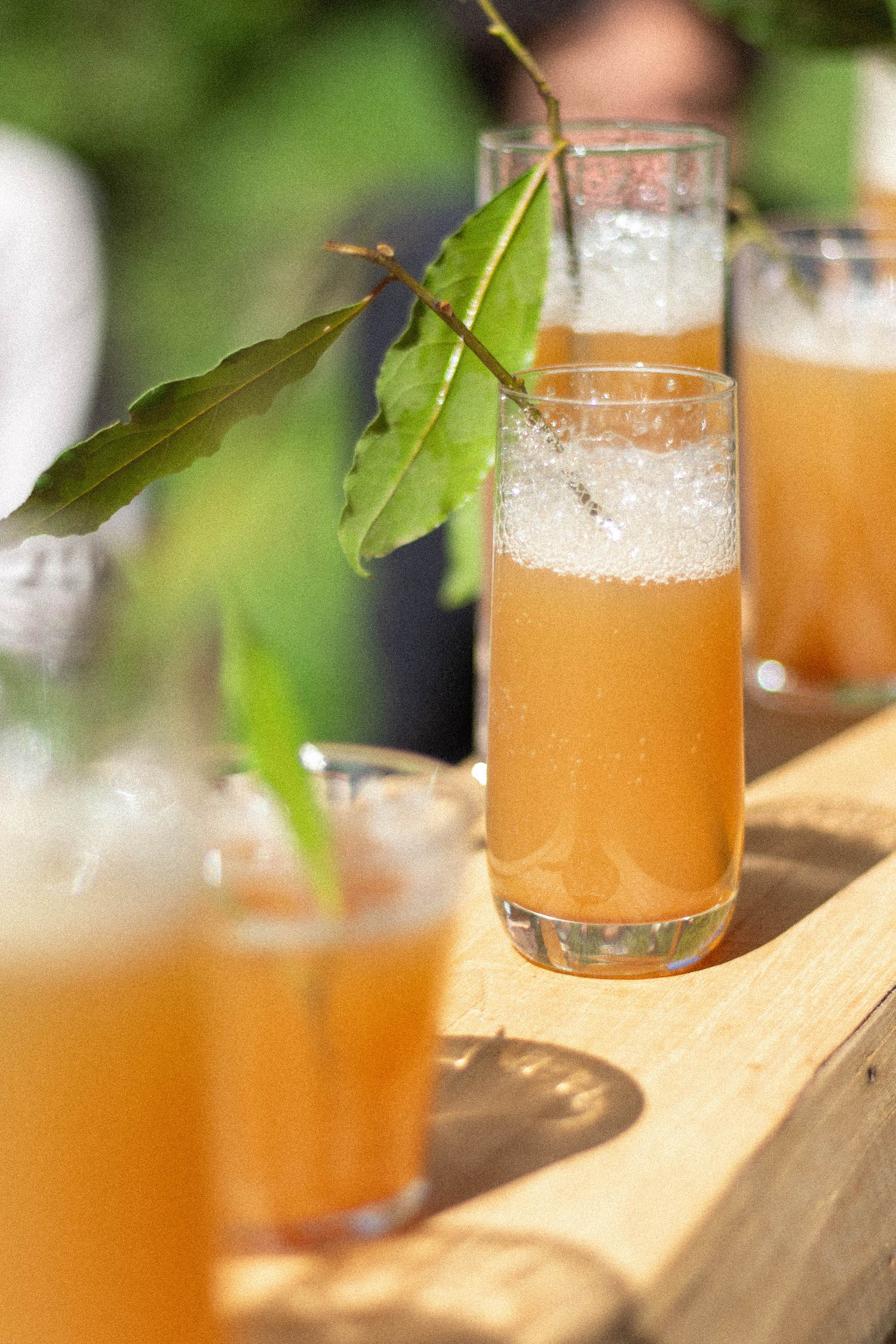
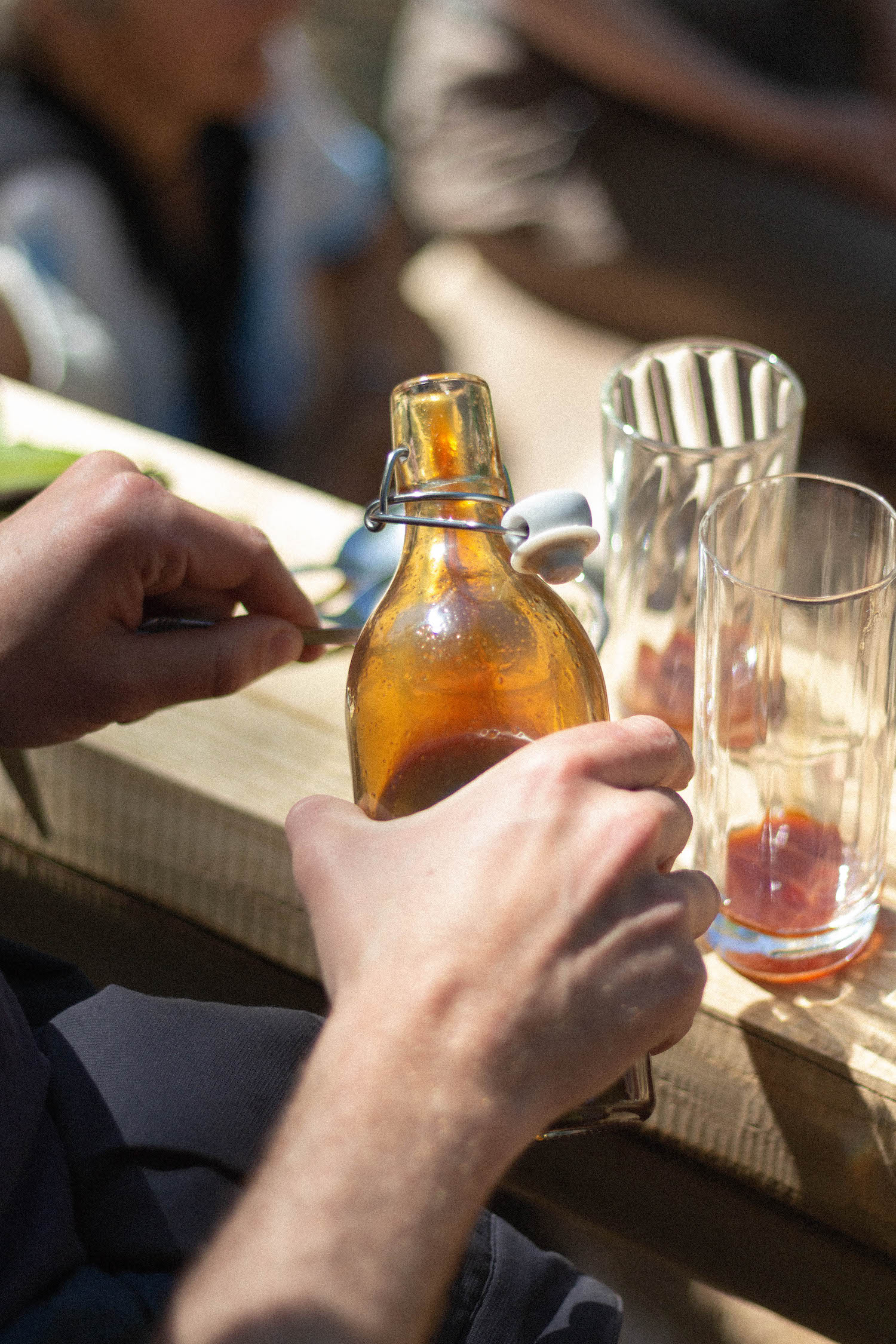
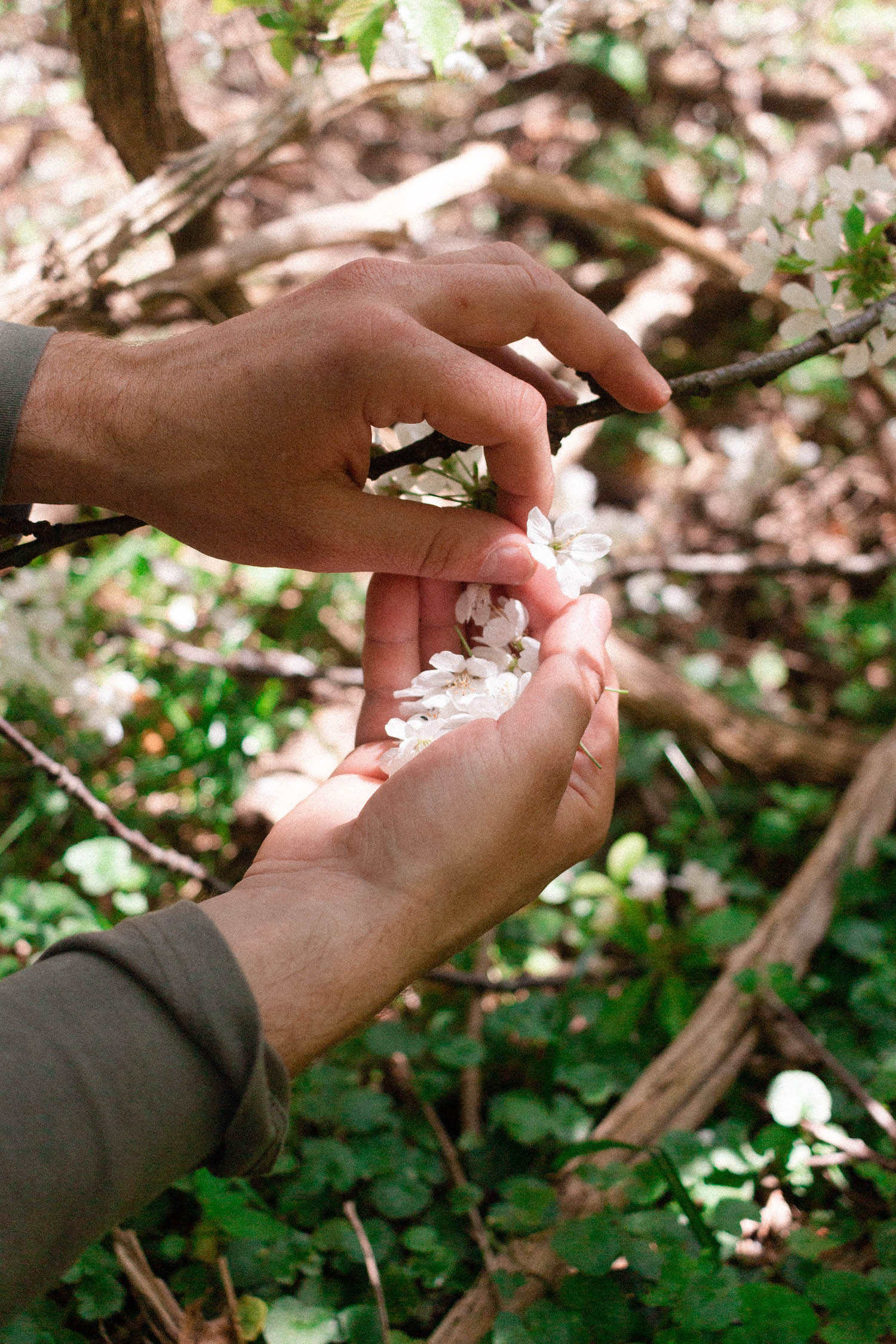
Based on the story of the fallen cherry tree, and the wild ancestors of cultivated fruit trees, we harvested materials such as leaves and flowers. These were dried and then used to share their unique aroma with guests at IZBA.
We also processed the leaves in a way similar to tea production: first bruising them, then allowing them to oxidise, before compressing them in a container under weight and leaving them to ferment for one to three days. Afterwards, the leaves were spread out and dried slowly.
This technique led to incredible almond-like aromas, cherry notes, and a subtle acidity and freshness from the lactic fermentation. It became an IZBA seasonal brew for colder moments of the year, while in summer it can be cold-soaked and served as a fresh iced tea.
Fermented Cherry Leaf Tea
A seasonal brew made from cherry leaves and flowers, inspired by the fallen cherry tree and the wild ancestors of cultivated fruit trees. The process is similar to tea-making: bruising, oxidising, pressing, fermenting, and slowly drying.
Makes Approx. 80–100 g dried tea
Ingredients
- 500 g fresh young cherry leaves
- 20–30 g cherry blossoms, optional
- 5–10 g young twigs or leaf stems, optional, for a woody aroma
- Clean water, only if needed for humidity
Method
Harvest young, healthy cherry leaves from an unsprayed tree. The best moment is spring or early summer, when the leaves are aromatic but not too tough.
Spread the leaves out on a clean cloth and let them wilt for 4 to 8 hours, until they become softer and less brittle.
Bruise the leaves by rolling them firmly between your hands, or by gently crushing them with a rolling pin. The leaves should darken slightly and release their aroma.
Place the bruised leaves in a clean jar or container. Press them down firmly and place a weight on top. The leaves should be compacted but not submerged in water.
Cover the container with a cloth or loose lid and leave it at room temperature for 1 to 3 days. The ideal temperature is around 18–24°C. Open once a day to smell and check the leaves. They should develop almond, cherry stone, and slightly sour aromas. If they smell rotten, mouldy, or unpleasant, discard them.
After fermentation, spread the leaves in a thin layer on trays. Dry them slowly at 35–45°C in a dehydrator or in a very low oven with the door slightly open. This can take 4 to 8 hours. The leaves should be completely dry and crisp.
Store in an airtight jar, away from light and moisture. Let the tea rest for at least one week before using, so the aroma can settle.
To brew hot
For one cup:
- 2 g fermented cherry leaf tea
- 200 ml hot water, around 85–90°C
Infuse for 5 to 7 minutes. Strain and serve.
To serve cold
For 1 litre cold brew:
- 10 g fermented cherry leaf tea
- 1 litre cold water
Infuse in the fridge for 6 to 12 hours. Strain and serve cold, optionally with a little pear syrup, honey, or lemon.
Taste profile
Almond-like, cherry stone, soft tannins, light acidity, and a gentle lactic freshness.
Important note
Use only correctly identified, unsprayed cherry leaves, and consume this as an aromatic infusion in moderate amounts. Avoid using wilted, mouldy, or damaged leaves from unknown trees.
The complex histories of orchard cultures led us to develop a vinegar-based recipe, inspired by ancient balsamico techniques and by the moments when wines and fruit juices turn into vinegar instead of wine.
We made a combination of reduced apple and pear juice, mixed it with fresh vinegar, and stored it to age in a wooden barrel. Over time, it slowly reduces and develops into something precious.
We used the first samples to serve a dish of wild boar ragout in a chestnut pancake, inspired by a story from the vineyards of Janko and Tamara Štekar.
Aged Apple & Pear Vinegar Reduction
A vinegar-based recipe inspired by old balsamico techniques, orchard cultures, and the transformation of fruit juices into vinegar. Reduced apple and pear juice are mixed with fresh vinegar and aged in wood until they become dark, sour-sweet, and concentrated.
Makes
Approx. 1 litre young vinegar reduction
Ingredients
- 2 litres apple juice
- 2 litres pear juice
- 500 ml fresh apple vinegar or pear vinegar, raw and unpasteurised if possible
- 50–100 g honey or sugar, optional
- 1 small pinch salt
- Optional: 1 small piece of toasted oak, chestnut, or cherry wood, if no barrel is available
Method
Pour the apple juice and pear juice into a wide pot. Bring to a gentle simmer and reduce slowly until you have about 1 litre of concentrated juice. This should take around 2 to 3 hours.
The reduction should be sweet, deep, and slightly caramelised, but not burnt. Remove from the heat and let it cool to room temperature.
Mix the reduced juice with the fresh vinegar. Taste. The mixture should be sweet, acidic, fruity, and slightly sharp. If it tastes too flat, add a little more vinegar. If it is too sharp, add a small amount of honey or sugar.
Add a small pinch of salt to deepen the flavour.
Pour the mixture into a clean wooden barrel. If you do not have a barrel, use a clean glass jar and add a small piece of toasted oak, chestnut, or cherry wood.
Cover with a breathable cloth or loose lid. The mixture should be protected from insects but still able to breathe slightly.
Age for at least 3 months, ideally 6 to 12 months. During this time, the vinegar will slowly mature, oxidise, reduce, and become more rounded.
Taste every few weeks. When the flavour is balanced, sour-sweet, woody, and complex, strain if necessary and bottle.
To use
Use the aged vinegar reduction:
- Dripped over roasted vegetables
- With hard cheese or fresh cheese
- In sauces for game, pork, or mushrooms
- With chestnut pancakes
- As a finishing vinegar for beans, roots, or bitter greens
Serving idea: wild boar ragout with chestnut pancake
For one simple serving:
- 1 chestnut pancake
- 120–150 g wild boar ragout
- 1–2 teaspoons aged apple and pear vinegar reduction
- Fresh herbs or bitter leaves
Place the ragout inside or on top of the chestnut pancake. Finish with a few drops of the vinegar reduction to bring acidity, fruitiness, and depth.
Taste profile
Dark fruit, cooked apple, pear, wood, acidity, caramel, and a slow balsamic sweetness.